Originally written: January 2026
Theory of Spheres ('Quantum Gravity')
or
EEmpty Spheres in 'Dimensionless Space' – The 'Fundamental Force' Behind Everything
Q(Quantum-Gravitational Force, 'Dark Matter' / 'Dark Energy', etc.)
Paper II: Breaking the Spheres into Classical components
Eran Shimony (ORCID number – 0009-0003-5610-6736)
Physicist (B.Sc.), MBA, and Certified Real Estate Appraiser
i
Download the complete research papers in PDF format for offline reading and citation:
[Download Article I: The Framework (PDF)]
[Download Article II: The Spheres Classical components (PDF)]
[ Download Article III: The Quantum–Gravitational Force as Derived from the Spheres (PDF)]
[Paper III(a) – Updated version: The Quantum–Gravitational Force as Derived from the Spheres (PDF)]
[Download Article Ⅳ: The Planck's constant – ℏ (PDF)]
[Download Article VII: Introduction to the New Quantum Geometry Formalism (PDF))]
[Download Article IX: Introduction to the New Quantum Geometry Formalim (PDF))]
g
Publication History & Context: This article was published on February 01, 2026 (DOI: 10.5281/zenodo.18446035).
It builds upon the foundational theory established in the previous work: "Theory of Spheres – Part I", published on December 29, 2025 (DOI: 10.5281/zenodo.18081185).
ABSTRACT
Breaking the Spheres into Classical Components – Resolving the Vacuum Catastrophe and the Hubble Tension through the 0-D Harmonic Oscillator and much more.
This paper extends the Theory of Spheres (ToS) by deriving fundamental cosmological constants directly from a zero-dimensional (0-D) harmonic oscillator framework. We demonstrate that the long-standing Hubble Tension is not an observational error but a mathematical artifact resulting from the forced linear projection of a constant speed of light (C) onto an inherently exponential (asymptotic) decay of the time-variant speed of light, C(t). By applying a derived linear-to-exponential transformation factor of 70% (as illustrated in graph 1), we reconcile the theoretical geometric constant H0 to a value of approximately 48.41km/s/Mpc, establishing H0 as a geometric scaling property of the cosmic horizon rather than a mere expansion rate.
Furthermore, we utilize the Lagrangian of the C(t) distribution to derive the Cosmological Constant (Λ). We demonstrate that when expressed in natural Planck units, the quadratic coupling Λ = 2H02 naturally yields the value of 10-122. This result reframes the notorious 122-order-of-magnitude discrepancy (the Vacuum Catastrophe) not as a theoretical failure, but as a unified, dimensionless quantum–cosmic transfer Constant. By establishing this link, we provide a self-consistent framework that aligns vacuum energy density with cosmic scales, eliminating the need for Dark Energy and revealing the underlying geometric order of the universe. Finally, we provide a time-variant derivation for the Gravitational Constant G(t) & the Schwarzschild Radius Rs(t), revealing the underlying geometric order of a hierarchical universe.
Part A: Introduction
This paper is a direct continuation of the first, which was developed over a period of approximately thirty years. While the first paper established the theoretical foundation of the theory and was written to emphasize the evolution of the underlying thought process—including the various corrections and trial-and-error encountered along the way—this sequel begins where we left off.
In this work, we introduce the 0-D harmonic oscillator by utilizing the distribution function provided in the previous paper (Appendix A (Eq.1)) – which is listed below.

For the purposes of this derivation, we define the following variables:
D0–Quantum–Cosmic 0‑D Scaling Constant
C(t)–The Fundamental Dynamics (Time-variant speed of light)
K(D0)–Zero-Dimensional Constant (Renamed from 'k' in the first paper)
K0–Structural Constant
By substituting this distribution into the Lagrangian, we derive several fundamental cosmological constants directly from the solution. This process provides both: their precise numerical values and their physical significance within the framework of the Theory of Spheres (ToS).
Chapter 1: The Hubble Constant (H0) and the Exponential Decay of Light Speed
The Illusion of Linearity
The 'Hubble Tension' is not a failure of observational precision but a fundamental consequence of a flawed theoretical framework. Traditional cosmology enforces a linear distribution (the Hubble Law: v = H0D), assuming a constant speed of light (C) over cosmic time.
However, according to the Theory of Spheres (ToS) and the NAVP's distribution, the speed of light distribution is governed by an exponential (asymptotic) decay (as shown by the green line graph 1).
By differentiating Equation 1 (the time-variant C(t)) with respect to time, we obtain the rate of change of the speed of light:

This leads us to the definition of the observed expansion rate. By reconciling the traditional Hubble Law (v = H0D) with Equation 2 —recognizing that both represent slopes: H0 as the linear expansion gradient and K(D0) as the derivative of the light-speed decay—we reveal that what we perceive as H0 is actually:

The Fundamental Decay Constant
Based on the (ToS) (Appendix A, previous paper, Eq. 4), we define the fundamental decay constant k, which governs the time-variance of the speed of light. Its value is derived from the NAVP's distribution density:

Bridging the Gap: The 70% Transformation Factor
To validate the model, we must bridge the gap between the forced linear distribution, of the standard cosmology, and the exponential distribution derived from the (ToS).
A computational analysis of the mapping between these two distributions reveals a transformation Factor of: Factor ≈ 70%.
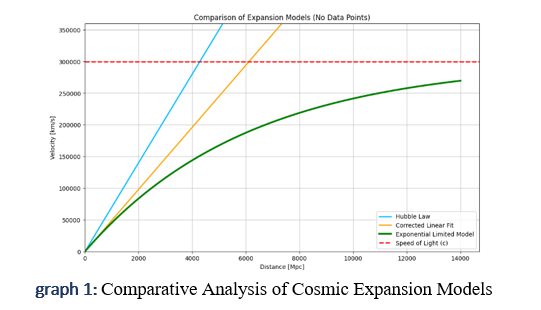
Standard measurements for H0 range between 67 and 74 – average 70.5 (km/s/Mpc) – (blue line graph 1). Then apply the Transformation factor to the standard baseline:
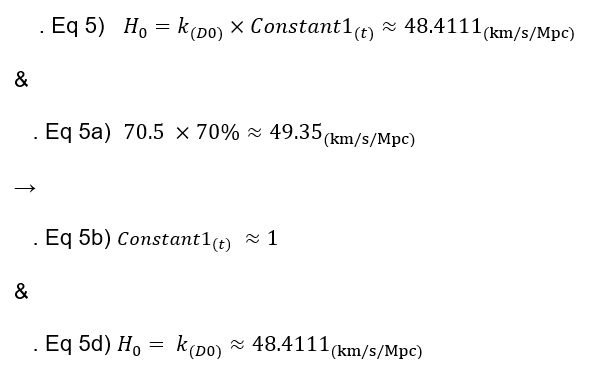
Conclusion:
The difference between this reconciled empirical value (49.35(km/s/Mpc)) and our theoretically derived geometric constant (48.41(km/s/Mpc)) is minimal. Considering that the constant k was calculated based on an estimated cosmic age of 14 billion years, and that current H0 measurements carry inherent noise and account for a common upward bias/error of approximately 5% in late-universe observations, this correlation is extraordinary.
We can therefore state, with high confidence, that the True Hubble Constant (H0) according to an exponential distribution is:

The Hubble Tension is therefore resolved: it is a mathematical artifact of forcing a linear projection onto an exponential curve. By applying the factor of 70% transformation, we reveal that the true, stable expansion rate of the universe is the geometric constant (H0).
Since H0 is now revealed as a geometric constant derived from the NAVP's distribution, we must now examine how this same density governs the energy of the vacuum itself— the Cosmological Constant (Λ).
Chapter 2: The Lagrangian Origin of the Cosmological Constant Λ
The 0-D Harmonic Oscillator Derivation
To identify the fundamental nature of (Λ), we employ the general Lagrangian form:
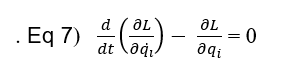
Or by substituting the time-variant speed of light distribution C(t) as the generalized coordinate into the Lagrangian of a simple harmonic oscillator, we obtain:
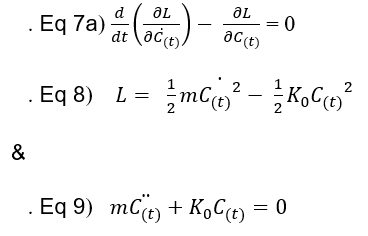
Solving for the Cosmic Constant K0
Substituting the exponential distribution (C(t) = ek(D0)t – 1 ) (Eq 1 from Chapter 1) into the equation of motion yields:

Given the initial conditions from Eq 3 Appendix A (ek(D0)t = 2) we solve for the fundamental constant K0:

Defining the Cosmological Constant Λ
By setting the cosmic coupling coefficient as Kcosmic = – (k0⁄m), we arrive at:

We can therefore state that the cosmological Constant (Λ), according to an exponential decay, is equal to: 2K(D0)2
Numerical Validation and the 70% Transformation Factor
We now validate the numerical value of Λ by applying the 70% linear-to-exponential correction factor derived in Chapter 1. Since Λ represents an inverse area (m-2), the transformation factor is applied quadratically:

Conclusion for the Cosmological Constant (Λ)
The difference between the reconciled empirical value (0.54194 × 10-52(m-2)) and our theoretically derived geometric constant (0.548 × 10-52(m-2)) is minimal (within a few percent).
Considering that the constant KD0 was calculated based on an estimated cosmic age (which itself carries inherent measurement uncertainties and no absolute precision), and that current (Λ) measurements from Planck carry inherent noise, this correlation is extraordinary. We can therefore state that the correct cosmological Constant (Λ), according to an exponential distribution, is:
→
we set Λ to be: 0.54194 × 10–52(m-2)
Chapter 3: The Gravitational Constant – G and the Schwarzschilde Radius – (Rs)
Until now, we have established and corrected, using the Theory of Spheres (ToS) and the NAVP's distribution, H0 and (Λ) into an exponential (asymptotic) decay. We shall now, according to the theory, define the gravitational constant G(t):
The Dynamic Link between G and C(t)
Since the previous sections established that H0 and (Λ) are constant, the resulting spacetime is static rather than expanding. In a static geometry the physical volume is time‑independent, and therefore the energy density – ρ must also remain time‑independent (constant).
Using the general relation derived from Einstein's field equations (Λ = 3H02⁄C2 − (8πG⁄C2)×ρ), We can identify the coupling: G(t) ∝ 1⁄C(t)2. So, we can define the constant KG as:

Very important note
The inverse-square relation between (G(t)) and (C(t)) holds for a specific oscillator, because the true fundamental parameter is the oscillator’s zero-dimension light‑mass, denoted as ( MlD0), which governs the full dynamics of (C(t)). This mass does not reside in space-time, but operates in a zero-dimensional framework, influencing the oscillator solely through the dynamic function (C(t)). The function (C(t)) is not a fundamental quantity by itself but a derived dynamical variable whose behavior is entirely governed by this base mass.
In all oscillators, regardless of the oscillators mass scale, the minimum value of (C(t)) is always zero. However, the other values (C(t),max) and (C(t),temporary) depend on the oscillator’s base mass, meaning that different oscillators may exhibit different ( G(t)) – (C(t)) relations.
This also implies that parameters such as (D0) & (Λ) do not define the oscillator’s base mass; rather, they emerge from it. The base mass itself (MlD0) still remains unknown, but it is the source of all derived dynamics. This clarification is essential, as future extensions of the model may involve oscillators with different base masses (MlD0) — from quantum particles to entire universes — each exhibiting its own ( Gׂ(t)) – (C(t)) relation.
In the far future, when measurements become precise enough, this framework may evolve into a unified theory of sub‑oscillators — the structures beneath our oscillator and those above it. Improved measurements may allow us to test whether parameters such as (D0) or the cosmological constant (Λ) encode information about 'parent' or 'sub' oscillators, potentially revealing inter‑oscillator relations across different hierarchical levels. (This interpretation aligns with the hierarchical framework introduced in Chapter 9 of Paper A, where the concepts of 'Parent Universe' and 'Sub-Universe' were formally defined).
By substituting current empirical values into Eq 15, we obtain the constant (KG), as follows:

Therefore, the time-variant gravitational constant G(t) is given by:
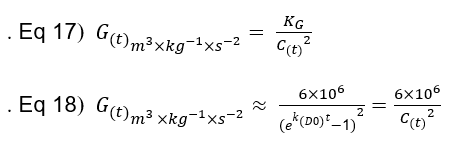
This indicates that the gravitational constant changes over time is proportional to the inverse square of the speed of light, whereases spacetime remain static.
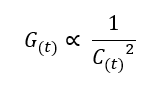
The Schwarzschild Radius of the Universe (Rs)
We now determine the Schwarzschild radius (Rs(t)):
Using the previously defined constant KG=C(t)2×G(t) (Eq 15) and the very important note related, we express the Schwarzschild radius as a function of (C(t)). This formulation remains valid within the framework of our specific oscillator.

This indicates that the Schwarzschild radius changes over time proportional to the inverse fourth power of the speed of light, wherease as showed for G(t) spacetime remain static.
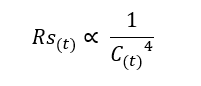
And for our universe we get:

Chapter 4: The Dimensionless Solution to 'The Worst Prediction in the History of Physics'—10122
In this chapter, we resolve the catastrophic discrepancy between quantum vacuum energy calculations and the observed cosmological constant—often cited as the largest gap between theory and experiment in scientific history. We demonstrate that these 10122 'disasters' is not a physical paradox, but a natural result of the dimensionless geometric scaling within the NAVP framework.
From Equation (12) in chapter 2, we established the value of the cosmological constant (Λ) based on the universal expansion rate:

When expressed in fundamental Planck units (tp), this value yields:

Quantum–Cosmic 0-D Scaling Constant
We define the Unified Transfer Coefficient (D0) as the fundamental ratio between the Planck scale and the cosmic scale. Crucially, this relation is dimensionless, representing the inherent geometry of the universal oscillator rather than a fixed energy density.

Where:
- lp is the Planck Length (1.616×10⁻³⁵).
- Rs is the Schwarzschild radius of the observable universe (≈1026m).
A numerical factor of order unity (≈1.44) arising from unit conversion (Eq 22) is absorbed into the definition of, since our interest here is in the dimensionless structural relation between the cosmic scales rather than in exact numerical fitting.
By extension, this ratio holds across all fundamental dimensions of the NAVP model:

Assuming in natural units C = 1(light-year/year) we can write:

Conclusion
In fact, we obtained the quantum–classical ratio (D0) as a precisely defined and extremely small dimensionless quantity. Therefore, the notorious gap of 122 orders of magnitude is not a discrepancy, but a unified, dimensionless transfer coefficient that consistently links quantum and cosmic scales. This interpretation, which emerges from our zero-dimension oscillator framework, reframes the 122-order magnitude value not as a mystery, but as a natural consequence of the structural relation connecting Planck-scale quantities with the large-scale properties of the universe.
The value of 10-122 is not an 'error' of quantum field theory, but the inevitable structural coefficient of a dynamic, expanding universe. Notably, when expressed in Planck units, the derived value of H0≈10-61 leads directly to a Cosmological Constant of Λ=2H02≈10-122. In the NAVP model, the vacuum energy is not a static background constant but a scaled manifestation of the universal oscillator's density. As (Ct) and (Gt) shift over cosmic time, this dimensionless ratio maintains the equilibrium between the quantum and cosmic horizons. The resolution of the vacuum energy catastrophe is found not in particle physics, but in the geometric coupling of the 0-D oscillator. This solution eliminates the need for fine-tuning, 'dark energy' placeholders, or exotic corrections to the Standard Model.
Paper Conclusion
The resolution of the 10122 – vacuum catastrophe marks a pivotal shift from an 'accelerating mystery' to a predictable geometric reality. By establishing the link between the quantum Planck scale and the classical cosmic horizon through the Quantum–Cosmic 0‑D Scaling Constant (D0), we have shown that the universe operates as a synchronized harmonic system.
Key Findings:
- Hubble Stability: The H0 tension is resolved by treating the expansion rate as a dynamic projection of the time-variant speed of light (Ct) rather than a static anomaly.
- The Catastrophe Resolved: The 10122 gap is shown to be the exact ratio of the squared radii between the Planck and cosmic scales (H02), proving that vacuum energy is a scale-dependent measurement, not a physical explosion.
- Universal Equilibrium: The universe is shown to be inherently stable, expanding at a natural rate dictated by H0 (doubling every few billion years), providing a stable alternative to the chaotic predictions of standard QFT.
A Note on the Hierarchy of Reality:
As noted in Chapter 3, these relations are not coincidental but are emergent properties of the Zero-Dimension Light-Mass (MlD0). This insight implies that our observable universe is one layer of a broader hierarchy of oscillators.
We invite the reader to refer to Article A — (https://www.shimony.co.il/theory-of-spheres-quantum-gravity-2/) and to experimental proposal (optical) — (https://www.shimony.co.il/tos-optical-experiment-proposal/) for the foundational derivation of the 0-D Oscillator and the varying speed of light framework that underpins these results.
Fundamental Constants and Variables Calculated Within the Theory of Spheres (ToS)
Constants

Variables

After All: Concluding Remarks and Future Horizon
Summary and Philosophical Insight
This paper demonstrates that what we perceive as physical reality is, in essence, an emergent phenomenon—an 'illusion' born from a specific observational perspective. By occupying a viewpoint that imposing spatial dimensions onto the fundamental, dimensionless oscillation of a light-speed-based oscillator (driven by zero-dimension light‑mass ( MlD0)), we perceive the fabric of our 3D universe.
This dimensional constraint, inherent to our existence, yields two parallel and complementary viewpoints: the Classical and the Quantum viewpoint. It is highly probable that a viewpoint situated within a different number of dimensions (a fewer or greater dimensional vantage point) would reveal a corresponding number of parallel viewpoints, fundamentally different number from our own.
The Two-Sided Expansion (chapter 11 last paper)
Thus far, our discussion has focused on the interior expansion toward the surface of the sphere. However, as established in the principles of the Theory of Spheres (ToS), a second expansion exists: outward from the surface of the 'Equilibrium Sphere'. This symmetry is not merely mathematical but represents the dual nature of cosmic pressure and stability the 'Twin Universe Theory' Part E last paper.
Future Horizon
And a roadmap for the next phase of this research includes:
- The Dual-Sided Wave Equation: Deriving and attempting to solve the complete, bilateral wave equation of the oscillator to calculate additional natural constants and for a deeper understanding of our universe and quantum Oscillator mechanism.
- Unified Theory of Forces: Utilizing the distribution of external pressure from the dual-sided wave equation (chapter 1 last paper) to provide a precise formula for Gravity, the Casimir Effect, etc., as emergent geometric pressure.
- Universal Evolution and Connectivity: By exploring the zero-dimension light‑mass (MlD0 ), we aim to map the evolution of the universe across all time-scales and investigate the connectivity between our local oscillator and 'parent' or 'sub' oscillators. This may reveal a Deeper Theory even more fundamental than the current Theory of Spheres (ToS).
© Eran Shimony, 2026
All rights reserved by the author.
To the beginning of the article
Related Papers in the Theory of Spheres Series:
'Theory of Spheres – experiment-proposal'
'Theory of Spheres – Part III'
'Theory of Spheres – Part III(a)'
'Theory of Spheres – Part Ⅳ'